
CNC Machining China vs. Alternatives: Which Material–Process Pair Wins Your Part?
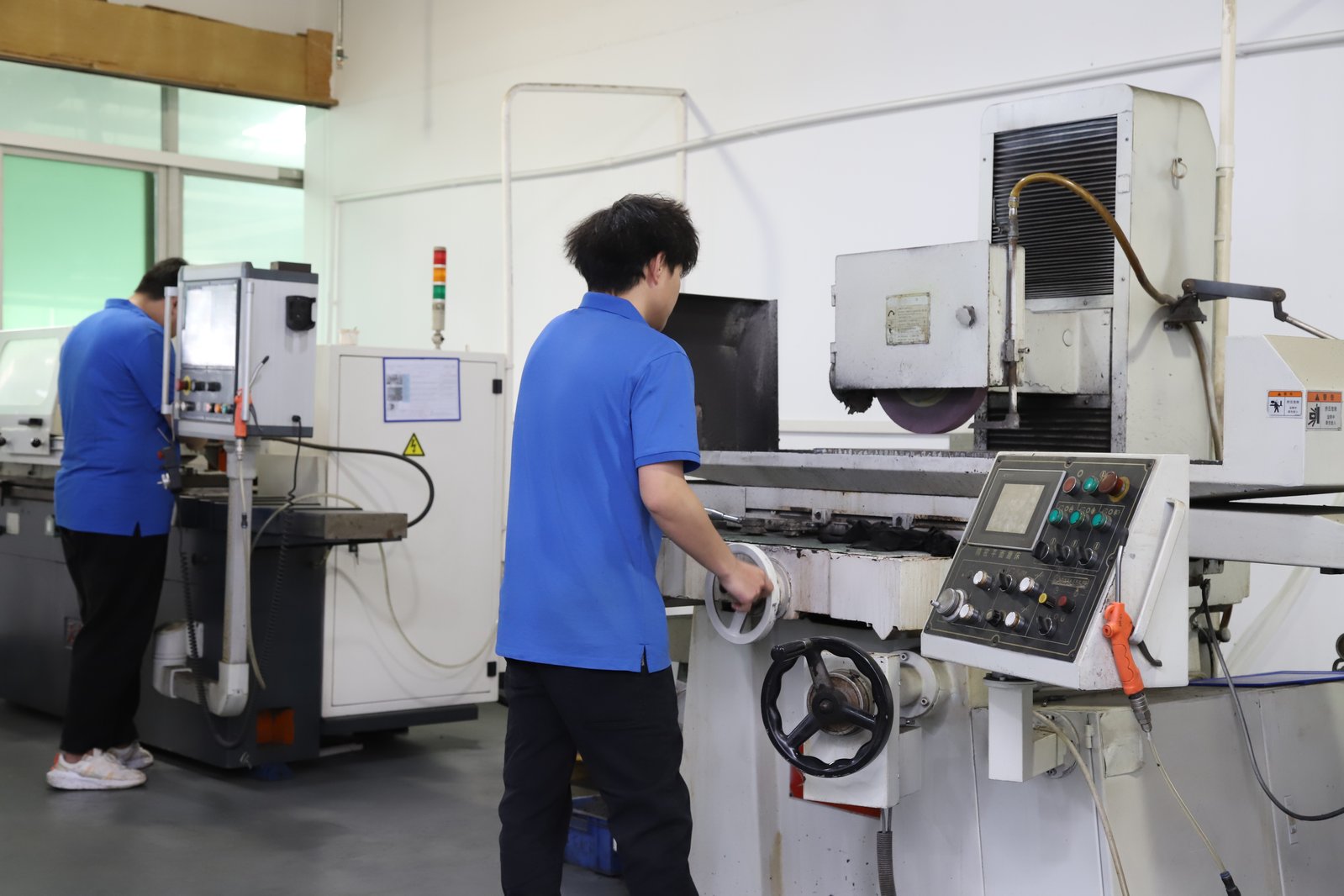
Every part you import from China starts as a material–process decision, and the decision is rarely "machining versus printing" in the abstract. It is a pairing question: which material, in which process, at which quantity, with which tolerance and finish the part genuinely needs. Machining from solid stock wins on tolerance, material range, and zero tooling, while alternatives such as metal 3D printing, die casting, and injection molding win on specific geometries and high volumes. This guide compares the realistic options from a buyer's side — the quantities where each one takes over, the tolerances each one can actually hold, and the verification each one demands before you commit a drawing to a supplier an ocean away.
What is a material–process pair, and why does it beat a process decision?
A part is not "machined" or "printed" or "cast" — it is an aluminum machined part, or a titanium printed part, or a zinc die-cast part. The material and the process are chosen together, because each one constrains the other. Aluminum 6061-T6 machines fast and holds fine tolerances; the same geometry in titanium machines slowly and costs more per part. A casting can deliver a thin-walled housing cheaply in volume, but the alloy's porosity and draft angles decide what the casting can and cannot hold. Choose a process without fixing the material and the quote comes back with a material assumption you never approved.
The buyer-side reason the pair matters more than the process is verification. When you source from China, every claim on the drawing — material grade, tolerance, finish — has to be checked against evidence. Machining from certified solid stock gives a verification chain that starts at the mill certificate and runs through XRF checks and CMM reports. An alternative process may be perfectly good for the part and still demand a different, longer chain of proof: a printed part needs mechanical property evidence the powder supplier's certificate does not automatically provide; a casting needs porosity control you cannot see from the surface. The process decision is therefore also a verification decision, and it should be made with both halves in view.
When does the material–process pair stay on the CNC floor?
Machining is the default answer for a specific band of requirements, and it pays to name that band before comparing alternatives:
- Tolerance is the first gate. Milling and turning hold ±0.003 mm on this floor, with ±0.002 mm available on precision-ground features. If the part carries a bearing seat, a sealing face, or a locating feature at that level, machining is not one option among many — it is the only process that holds the number without a secondary step.
- Material range is the second. Aluminum, stainless, carbon and alloy steel, brass, copper, titanium, and engineering plastics all machine from solid stock on the same floor. A supplier that runs this range lets you change material without changing process, which is worth real money when a prototype material does not survive testing.
- Quantity is the third. With no mold or die to amortize, the MOQ is one piece, and per-part cost stays roughly flat from a single prototype into production. The alternative processes all carry a tooling cost that only pays off once volume crosses a line.
The honest boundary: machining is not the cheapest way to make a thousand thin-walled housings, and it does not manufacture internal lattice structures. It wins where tolerance, material integrity, and low-to-mid volume matter more than the geometry tricks or the per-piece economics of a dedicated tool. The parts that should stay on the CNC floor are the ones where the pair — free-machining material, tight tolerance, moderate volume — is exactly what the design needs.
Where does metal 3D printing beat machining, and where must it hand back?
Metal additive manufacturing wins on geometry that cutting tools cannot reach: internal channels, lattice structures, conformal cooling, and organic shapes that would need impossible fixturing to machine. For one-to-ten-piece runs of that geometry, printing can be faster and cheaper than machining because there is no toolpath fight and no scrap from a solid billet. It also wins early in development, when the design is still changing and a printed part can be revised overnight without new tooling.
Where it hands back to machining is equally specific. Printed parts carry the properties the powder bed gives them, not the properties of wrought stock — anisotropy, lower fatigue strength, and surface roughness that often needs machining anyway on critical faces. Tolerances from printing sit at a different level from machining: typical printed features land in the ±0.1–0.5 mm range rather than ±0.003 mm, and sealing, bearing, and locating surfaces still go to a cutter or a grinder afterward. Threads in printed parts are unreliable without a machined or thread-inserted hole.
The buyer-side rule: 3D printing is a geometry and iteration tool, not a tolerance or material-integrity replacement. When the design calls for internal complexity that machining cannot reach, print it — then machine the functional faces and verify the material with the same evidence chain you would demand of any metal part. When the part is a straightforward bracket or shaft, printing is usually the expensive way to a worse result.
When does die casting beat machining, and what still gets machined?
Die casting wins at high volume on parts that are born as thin-walled, net-shape housings and enclosures. The die delivers geometry in seconds that a machine would take minutes to cut, and the economics flip hard once the tooling is amortized: a machined aluminum housing at a few hundred parts competes well; the same housing at fifty thousand parts is a casting conversation. Casting also consolidates — multiple machined parts can merge into one cast body with bosses, ribs, and mounting features formed in.
What casting cannot do is hold machining tolerances or deliver wrought material properties. A die casting needs draft angles, so walls taper and features that must stay parallel need a secondary cut. Porosity is a fact of the process — internal voids that surface machining can expose and that fatigue-critical parts cannot tolerate. And the verification chain changes: instead of XRF on solid stock, a casting buyer needs to ask how porosity is controlled and inspected, and which critical faces are machined after casting to bring them back to a real tolerance.
The practical split is a pair of pairs. At low volume and tight tolerance, machine it from solid stock — aluminum 6061-T6 or A380-equivalent cast material, depending on what the part must carry. At high volume with thin walls and generous tolerances, die-cast it, then machine the few faces that seal or locate. The hybrid is the honest answer more often than either process alone, and the quote should show both steps rather than hiding the secondary machining.
Which parts deserve forging over machining, and what proof does a forged part need?
Forging wins when the part must carry load through its grain structure. Where a machined part cuts through the material and leaves the grain following the stock, a forging aligns the grain with the part's shape, which buys fatigue life and impact toughness that machining from bar cannot match. Connecting rods, suspension components, valve bodies, and gear blanks are forged for that reason, not for cosmetic advantage.
Forging is not a tolerance process. A forged blank arrives near-net-shape with generous variation, and the functional surfaces — bores, sealing faces, threads, and locating features — are machined afterward on the same kind of floor that machines from solid stock. So a "forged part" is really a forged blank plus machined features, and the buyer's verification has two halves: the forging's material and grain evidence, and the machining's dimensional evidence.
The China-sourcing caveat: forged material carries its own certificate trail — heat number, chemical composition, and mechanical test results from the forging house — and that trail must be read against the standard the drawing names, exactly as a mill certificate is read for solid stock. A supplier that can machine the forging in-house, XRF-check the incoming forging, and CMM-verify the finished features closes the whole chain under one roof. One that buys forged blanks from an unnamed third party adds a hand-off you cannot audit.
When does injection molding beat machining on plastics, and what happens to the tolerances?
Injection molding is the volume answer for plastic parts. Once the mold is built, each shot produces a finished part in seconds, and at tens of thousands of pieces the per-part cost falls below anything machining can reach. It also delivers thin, uniform walls and complex plastic geometry that would be impractical to cut from sheet or bar. For enclosures, housings, and high-volume polymer components, molding is the pair that wins.
The trade-offs are mold cost, mold lead time, and tolerance. A mold is real money and real weeks before the first part exists, so molding only pays off at volume. And molded tolerances are set by polymer shrinkage, which varies by material and wall thickness. Typical molded features land in the ±0.1–0.5 mm range rather than machined precision, and a molded part that needs a tight bore or a true flat face gets those features machined afterward. The material also matters: amorphous plastics like ABS shrink less predictably than semicrystalline ones, and glass-filled grades move differently from unfilled.
For a buyer comparing against China CNC machining, the honest comparison is total cost across the program: mold cost plus per-part price at your quantity, against machining's no-tooling per-part price. The crossover usually sits at high volume for simple plastic parts, and when the part needs tight plastic features, the answer is a molded body with machined critical faces, exactly the hybrid logic that applies to die casting.
How do you compare the pairs on one sheet, and what does the winner need to prove?
The decision framework that survives an RFQ is a single table scored on the dimensions that actually change the answer:
| Dimension | CNC machining | Metal 3D printing | Die casting | Forging | Injection molding |
|---|---|---|---|---|---|
| Best quantity | 1 to low thousands | 1–10 iterations | High volume | Medium–high volume | High volume |
| Tolerance | ±0.003 mm (grind ±0.002) | ±0.1–0.5 mm typical | Cast tolerance + draft | Near-net; machined after | ±0.1–0.5 mm shrinkage-driven |
| Material integrity | Wrought, certified solid stock | Powder-bed, anisotropic | Porosity possible | Grain-aligned, strong | Polymer, shrinkage |
| Tooling cost | None | None (but high per-part) | Die — amortized at volume | Die — amortized at volume | Mold — amortized at volume |
| Best geometry | Prismatic, round, tight features | Internal channels, lattices | Thin-wall net-shape shells | Load-carrying shapes | Thin-wall plastic shells |
| Verification chain | Mill cert + XRF + CMM | Powder + printed properties | Porosity + machined faces | Forging cert + machined features | Mold + shrinkage + machined critical features |
Read the table against your own part before you ask a supplier for a quote. Mark the quantity band, circle the tolerance that matters, and name the one or two features that cannot fail. The process that survives all three columns is your answer, and if the answer is a hybrid, as it often is, the RFQ should ask for the full chain: the alternative-process part, the machined critical faces, and the evidence for both.
What does the winning pair need to prove when you source from China?
Once the pair is chosen, the verification question follows the same discipline this site applies to every claim: name the evidence before you commit. For a machined part, the chain is a mill certificate read against the standard, XRF checks on incoming stock, CMM reports on the critical dimensions, and SPC data where process capability matters. That is the trail this factory runs on every lot, with certificates verified against the invoicing entity.
For an alternative-process part, ask what changes. A printed part needs mechanical property evidence and a defined build direction, not just a pretty surface. A casting needs its porosity control stated and its machined critical faces identified. A forging needs its heat number and mechanical test results traced to the standard. A molded part needs its shrinkage assumption on record. In every case the rule is the same: the drawing names the material and tolerance, and the supplier names the evidence that proves both — before the quote becomes an order.
The buyer who compares pairs with this framework gets a decision that survives contact with reality. The buyer who asks "machining or printing?" without fixing material, quantity, and tolerance gets a quote based on someone else's assumptions, and in cross-border sourcing, the assumptions are corrected at your cost later. The certificate-verification guide on this site explains how to check the quality claims behind whatever process you choose, and the parts verification guide walks through the document trail for a machined order end to end.
Frequently Asked Questions
When should I choose CNC machining over 3D printing?
Choose machining when the part needs a real tolerance (milling and turning hold ±0.003 mm here), a certified wrought material, or a quantity above a handful. 3D printing wins on internal channels, lattices, and fast design iteration at one-to-ten-piece runs; for a straightforward bracket or shaft, machining is usually cheaper and delivers better material integrity.
What is the crossover quantity between CNC machining and die casting?
There is no fixed number — the crossover is where the die cost amortizes to less than the machining cost difference. A thin-walled housing that machines slowly can cross over at a few thousand parts; a simple part that machines fast may not justify a die until far more. The comparison that matters is die cost plus per-part price at your quantity against machining's per-part price at the same quantity.
Can die-cast parts hold tight tolerances?
Not as-cast. Die casting delivers net-shape geometry with draft angles and possible porosity, so tolerances are cast-grade, not machined-grade. The features that must seal, locate, or carry a bearing are machined after casting to bring them back to real tolerance, which is why the hybrid (cast body plus machined critical faces) is the honest answer for most precision housings.
Is a forged part stronger than a machined part?
Forging aligns the grain structure with the part's shape, which can buy fatigue life and impact toughness that machining from bar does not provide. The forged part is then machined on its functional surfaces, so a "forged part" is really a forged blank plus machined features. If the design needs load-carrying grain structure, forge it; if it needs dimensional precision, the machining half still does that work.
When does injection molding beat machining on plastics?
At high volume — once the mold cost amortizes, each shot produces a part in seconds and the per-part price falls below machining. Molded tolerances are shrinkage-driven (typically ±0.1–0.5 mm), so tight plastic features are machined afterward. For simple plastic parts at low volume, machining from plate or bar is usually the faster, cheaper route with no tooling cost.
Does 3D printing produce parts with the same strength as machined metal?
Not automatically. Printed parts carry the properties of the powder-bed process — anisotropy, lower fatigue strength in some directions, and surface roughness that often needs machining on critical faces. A printed part must be treated as a different material from wrought stock until its mechanical property evidence says otherwise. Machining from certified solid stock starts from the mill certificate and keeps the wrought structure.
What documents should I request when comparing processes from China suppliers?
The drawing's material and tolerance claims each need evidence: a mill certificate for solid stock, powder and build-direction documentation for printed parts, porosity control and machined-face confirmation for castings, heat number and mechanical tests for forgings, and shrinkage assumptions for molded parts. Request the evidence list with the quote — a supplier that commits to documents up front is one whose process claims you can actually audit.
Not sure which material–process pair is right for your part, or what evidence the winner should ship with it?
Send the drawing and the quantity. We will come back with the process comparison for your geometry, the tolerance each option realistically holds, and the verification documents buyers should expect. Email [email protected] or call +86 13126536955.