
How to Choose a CNC Machining China Supplier Online: A 30-Minute Screen That Cuts the List in Half
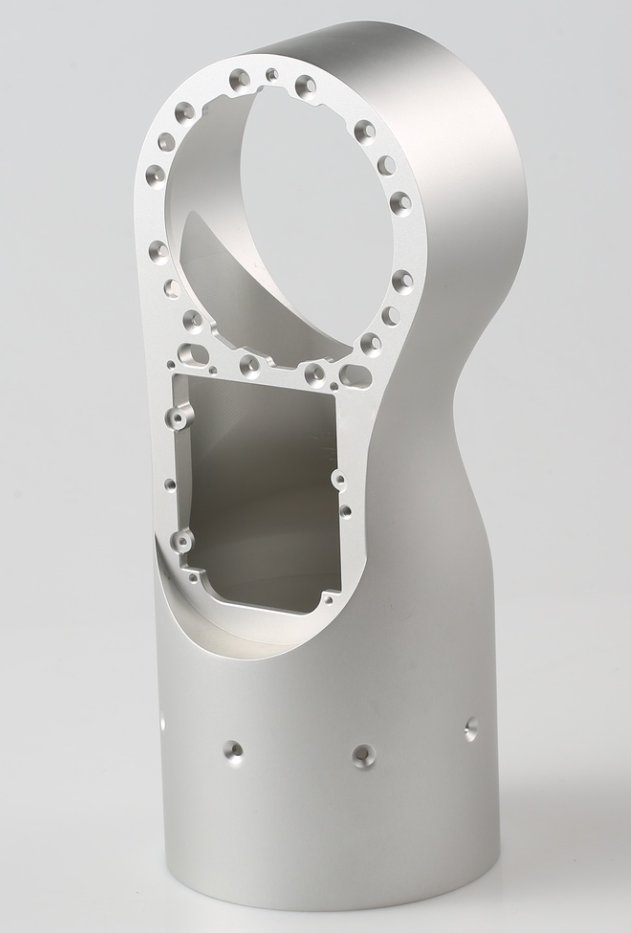
Choosing a CNC machining China supplier from your desk is a different job from choosing one at a trade show, because everything you can inspect is what the supplier chose to publish. That is not a reason to distrust the screen — it is a reason to run it against evidence instead of impressions. In thirty minutes you can pull the legal entity, check the certificates by number, read the machine list for what it omits, test the tolerance claim against the instruments named, and separate the factories that publish verifiable facts from the trading desks that publish adjectives. This guide is the buyer's screen: what to check first, what each check proves, which red flags end the process on the spot, and how to turn the survivors into a shortlist that deserves your drawing.
What can a 30-minute online screen settle before you send a drawing?
Set the right expectation first, because a screen that tries to do everything ends up doing nothing. Thirty minutes online settles one question only: whether a supplier deserves your drawing, your time, and a real conversation. It does not settle price, quality in production, or trust over a three-year program — those are settled by a quote, a first-article inspection, and a history of shipped lots. What the screen can do reliably is remove the suppliers that cannot survive basic verification, and that removal is worth real money because every supplier you keep costs you an RFQ cycle, a document review, and a week of calendar.
The discipline that makes a thirty-minute screen honest is the same discipline this site applies to its own claims: every fact is a number, a name, or a document, and nothing is a logo. Run the screen in a fixed order — the company, the certificates, the machine floor, the quality system, and the tolerance evidence — and record the answer to each check in writing. A supplier whose website answers every line with specifics is a candidate for the shortlist. A supplier whose website answers with adjectives is a candidate for the skip pile, no matter how polished the page looks. The two paragraphs you read in five minutes can save you from an hour of conversation that should never have happened.
Which company and certificate facts should the first ten minutes pull from the site?
Start where the risk is hardest to undo: the legal entity behind the brand. A machining website can be built in an afternoon; a company registration cannot. In the first pass, pull the registered company name, the registration number, the registered address, and the name that will appear on the contract and invoice. Then check that the same entity appears on the site, the certificate, and the quoted terms — a supplier that uses three different names across its own pages is not being creative, it is being unverifiable. The entity behind this site is Dongguan Zhuohang Ltd, and the site states it plainly rather than hiding behind a brand, because a buyer who cannot name the legal entity cannot verify anything else.
Certificates come second, and the rule is to check them by number, not by logo. Ask what a shop's quality pages do not always say: the certificate numbers, the certifying body for each, and the full scope statement including any design exclusion. A compliant CNC machining China supplier in the automotive supply chain will typically show ISO 9001:2015, IATF 16949:2016, and ISO 14001:2015. The IATF scope statement will say what it covers and what it excludes — a build-to-print manufacturer's scope excludes product design, because the supplier machines to your drawing and does not own the design. That exclusion line is a feature, not a gap: it tells you the supplier is honest about where its responsibility ends. If the site publishes only the logos, treat the certificates as unverified and put "confirm certificate numbers with the registrar" on the follow-up list — the same move the verification guide on the home page makes the center of its certificate checks — before you invest more time.
How do you read a machine list and a tolerance claim for what they omit?
By the ten-minute mark the screen moves to the floor. A machine list is useful only when it has the same granularity as an audit sheet: machine types with counts, brands, and the inspection equipment that sits beside them. The factory behind this site names 100+ production machines — 3-axis, 4-axis, and 5-axis milling centers, lathes, mill-turn centers, and grinders — and separately names 20+ inspection instruments, because a machine list without a measurement bench is a list of cutting capacity, not a list of capability. The distinction matters to a buyer: a shop that can cut a feature but cannot measure it has quoted you a tolerance it cannot prove.
Tolerance claims deserve the same reading. A factory that holds ±0.003 mm on milling and turning and ±0.002 mm on precision grinding can say so in one sentence. It should also be able to name the process capability behind that claim — Ppk ≥ 1.67 at the initial study on key characteristics and Cpk ≥ 1.33 on general characteristics. Capability is reported per characteristic: every report names the feature, its tolerance band, the sample size, the sigma method, and the study window., drawn from SPC data rather than from a single good sample. When the site names the instrument that checks each claim — a CMM for critical dimensions, an XRF spectrometer for incoming material, a surface roughness tester for finish — the tolerance is attached to a measurement method. When the site promises "high precision" without a number, an instrument, or a report, the tolerance is attached to nothing. Read every capability sentence for the instrument it names; the ones that name none are the ones to drop.
Which quality signals can you verify from a browser, and which need a phone call?
Quality claims split cleanly into what a browser can verify and what it cannot. You can verify from the site that the supplier describes an incoming material check, because a compliant shop will say how it verifies grade — an XRF spectrometer against the mill certificate before the bar reaches a machine — and will offer that record with shipped lots. The documentation set should be named too: material certificate, XRF record, CMM report, and the certificate numbers to check with the registrar. The FAQ is worth reading for consistency, because a site that answers scope, tolerances, lead time, and documentation in writing is a site that has thought about buyer questions more than once. You cannot verify from the browser that the calibration records are current, that the CMM is actually used on your part, or that the first-article report is produced rather than promised — those need a phone call, and later a sample.
Use the call as the second stage of the same screen. Ask the supplier to walk you through its workflow and name the record at each stage: drawing review, incoming inspection, machining, in-process measurement, finishing, final inspection, and documentation assembly. A shop that answers with the sequence and the record at each step is a shop whose workflow is real; a shop that answers "we just machine it" is a shop whose stages exist but whose records do not. Keep the screen honest about its limit: the browser pass removes the unverifiable, and the ten-minute call removes the vague. What survives both is a shortlist, not a decision.
Which red flags should end the screen on the spot?
Some findings are worth a follow-up; others should end the screen immediately, because the pattern behind them predicts failure across every later stage. End the screen when the site will not name a legal entity or a registration number, because a supplier that hides its own identity will not document your parts. End it when the certificates appear as logos only, with no number, no certifying body, and no scope statement, because a certificate you cannot verify by number is a decoration. A machine list that names no instruments is another stop, because a tolerance without a measurement method is a hope. And end it when the capability language substitutes adjectives for numbers — "best quality," "unbeatable price," "we can do anything" — because a shop that cannot quantify its own claims in writing will not quantify your parts in a report.
Watch also for the structural tells that cost more time than they save. A site that changes the entity name between pages, an address that does not resolve to an industrial facility, a "factory" page built on stock images, or a social feed that reposts the same content under several brands — each one is a small signal that the operation is a desk, not a floor. None of these tells is proof of fraud on its own, and an honest broker can exist in principle. But the buyer's screen is a filter, not a court of law: you do not need to convict a supplier to pass on it. A desk can quote, a factory can show a floor; when a supplier gives you only quotes, you have already paid for the missing floor in risk.
How do you turn the survivors into a shortlist that earns a drawing?
The screen closes with the survivors, and the survivors earn the drawing by surviving one more test: the RFQ. Send the same drawing and the same questions to every supplier that passed, and grade the replies the way you graded the websites. The quote should state five things: the tolerance it will hold per feature and the instrument that measures it, the material grade and how the lot is verified, the finishing and special processes included and who performs them, and the certificate numbers to check with the registrar. The lead-time tier should match the process count — roughly 3 days for simple parts, 7 days for standard parts, and up to 30 days for complex parts with many steps or finishing. A reply that answers each line with a number or a document has passed the screen; a reply that substitutes adjectives for numbers has simply moved the website's vagueness into the quote.
Keep the order disciplined to the end. Verify the certificates and the entity before you compare prices, because on China sourcing the cheapest quote is rarely the cheapest part in service. Then use the first order as the final gate: a one-piece minimum lets you prove the tolerance, the report, and the documentation on a single part before you commit volume, and a first-article inspection turns the supplier's claims into a record you can read. The 30-minute screen was never the whole decision — it was the filter that made the real decision possible by removing everyone who could not survive a browser and a phone call. The factory that survives the screen with numbers, names, and documents is the one whose next email is worth opening; the buyer's cost model and the quality system page on this site walk through what the quote and the reports should contain before you commit.
Frequently Asked Questions
What can I actually settle in a 30-minute online screen?
Whether a supplier deserves your drawing and a real conversation. The screen removes suppliers that cannot survive basic verification — no legal entity, no checkable certificates, no measurement instruments named. Price, production quality, and long-term reliability are settled later by a quote, a first-article inspection, and a history of shipped lots.
How do I verify a CNC machining China certificate from my desk?
Check it by number, not by logo. Ask for the certificate number, the certifying body, and the full scope statement including any design exclusion, then confirm the number with the registrar. A compliant IATF 16949 scope will say what it covers and what it excludes — a build-to-print shop's scope excludes product design under Clause 8.3.
Is a machine list on a supplier website trustworthy?
Read it for granularity, not for trust. Machine types with counts, brands, and the inspection instruments on the floor are useful evidence; a generic list of capabilities is marketing. What matters is whether the named machines and the named measurement equipment together support the tolerance the site claims.
Should I compare prices during the screen?
No. The screen is a qualification filter, and price belongs to the quote stage after the supplier has passed it. Comparing prices before you verify certificates, entity, and measurement method means comparing parts that are not the same product, because the documentation and proof are part of the price.
Is a supplier with no registration number on its site always a trading desk?
Not always, but it is always unverifiable, which is the same outcome for a screen. A factory has a legal entity, a registration number, and a floor it can describe; when none of those appears in writing, the screen ends and the supplier does not reach the shortlist.
Do I need a factory visit before I order from China?
Not for the first order. The online screen, a ten-minute call on the workflow, and a one-piece first order with a first-article report can prove the tolerance, the material, and the documentation without a flight. A factory visit belongs to the later stage, when volume justifies the trip.
What should the survivors' quote include so that the reply finishes the screen?
The tolerance per feature and the measuring instrument, the material grade and its verification method, the finishing processes and who performs them, the certificate numbers with the certifying body, and a lead-time tier that matches the process count. A reply that answers each line with a number or a document has passed.
Running your own 30-minute screen on a CNC machining China supplier?
Email the STEP or IGES model with your toleranced 2D drawing to [email protected] or call +86 13126536955. You will get the certificate numbers and scope to check with the registrar, the machine and instrument list behind the tolerance claim, and an itemized quote with prototype and production tiers on the same page.