
Aluminum vs. Stainless for CNC Machining in China: A Decision Table
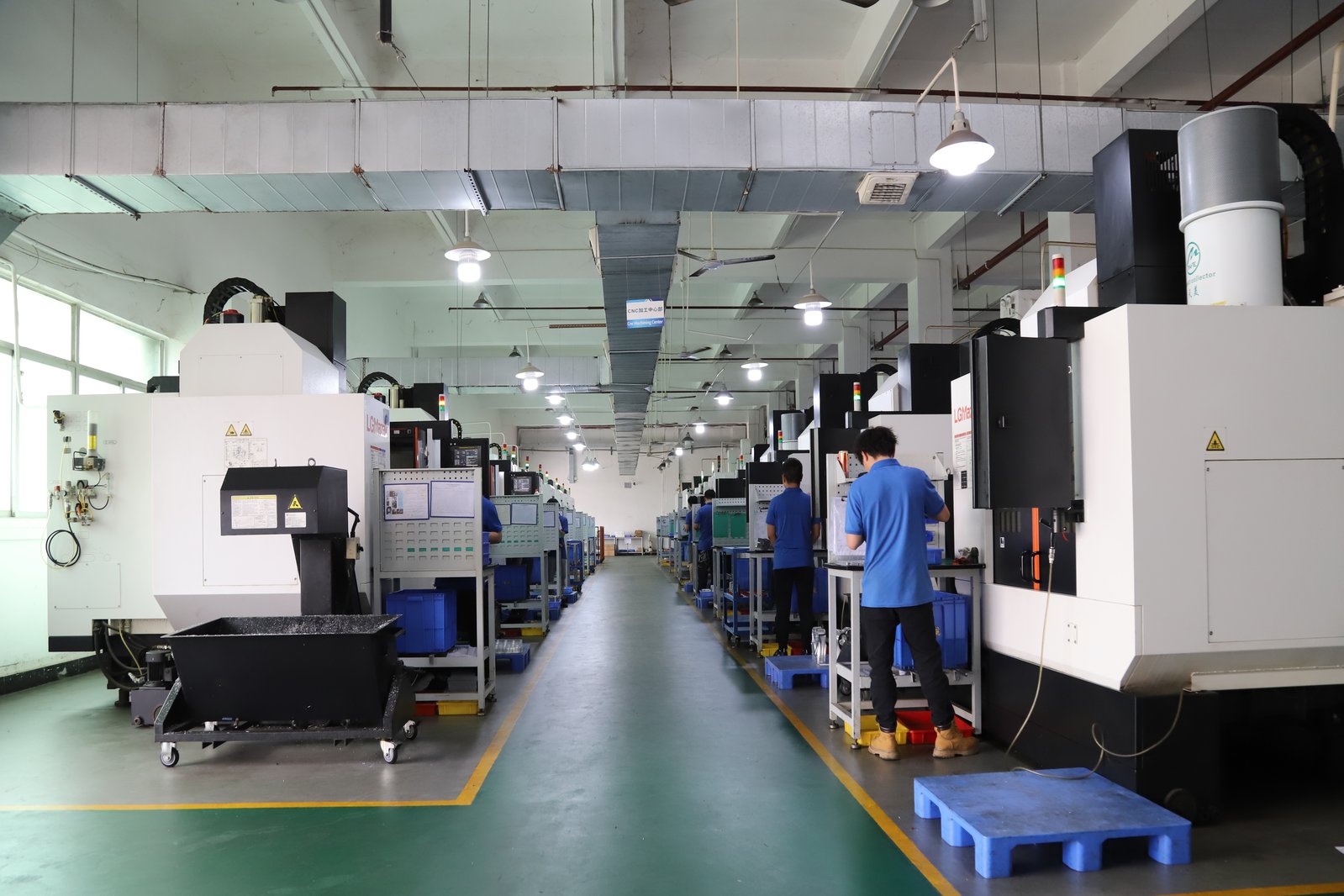
Aluminum and stainless steel are the two most common materials on any China machining quote, and the choice between them is not a taste decision. The two families differ by a factor of three in density, by roughly a factor of three in stiffness, and by completely different rules for corrosion, surface treatment, and what buyers must verify when the parts arrive. This guide turns the comparison into a decision table: for each requirement a part can carry — weight, stiffness, corrosion, temperature, surface treatment, tolerance, and cost — it names whether aluminum wins, whether stainless wins, or whether the answer depends on something else. When the table points to a material, the verification trail that material demands is the second half of the decision.
What is the aluminum vs. stainless decision really deciding?
Before comparing properties, it is worth naming what the decision is not about. Both materials machine to the same working precision on this floor — milling and turning hold ±0.003 mm, with ±0.002 mm on precision-ground surfaces — so the choice is not about what a China CNC shop can hold. It is about what the part must survive in service, and about which material's verification chain you are willing to manage across an ocean.
The useful framing is a set of questions rather than a property chart. Is the part weight-critical, or is it bolted to something heavy anyway? Does it face corrosion, and what kind — humidity, salt, chemicals, or food contact? Does it carry load, and is that load about stiffness or about yield strength? Does the assembly see temperature swings wide enough to matter at the tolerance you specified? And what happens to the surface after machining — anodizing, passivation, plating, or nothing? Each answer rules out one material or points to the other, and the decision table below walks those answers one row at a time.
When does weight decide the material?
Aluminum sits at roughly 2.7 g/cm³; stainless steel at roughly 7.8–8.0 g/cm³ depending on grade. That is a factor of about three — a stainless part weighs about three times what the same geometry weighs in aluminum, with no change to the drawing. For a hand-held instrument, a drone frame, a robot arm link, or any part where every gram travels, aluminum wins outright and the comparison ends there.
The qualification a buyer should add: weight only matters where it matters. A stainless bracket bolted to a stationary steel machine frame carries its weight at no cost to anyone, and the three-times penalty is irrelevant next to the other properties. The question is not "which is lighter" but "does the design pay a penalty for the weight of the part." If it does — the part moves, flies, rotates, or is carried — aluminum is the answer. If the part is static and the weight goes into a structure that was going to weigh what it weighs anyway, let the other rows of the table decide.
When does corrosion decide the material, and what does each one need after machining?
Corrosion is where the two families diverge most sharply, and the honest answer has more nuance than "stainless resists corrosion." Stainless resists corrosion through its chromium oxide film, and it resists some corrosions very well, but it is not immune. In chloride environments, standard 304 can pit, which is why 316 and 316L carry molybdenum and are specified for marine, chemical, and chloride-facing parts. Bare aluminum in a marine or salt environment pits on its own and corrodes rapidly when coupled to stainless steel or brass in an electrolyte — the classic galvanic pair. Neither family is a universal corrosion answer; each has its environment.
The surface treatment after machining is where the decision becomes a specification:
- Aluminum anodizes. Anodizing grows a controlled oxide coating — Type II sulfuric anodizing typically deposits 5–25 µm and Type III hard anodizing runs thicker — that resists corrosion and can carry color. The coating grows into and out of the surface, so bores shrink and outer diameters grow by the coating allowance, which matters when an anodized dimension must still sit inside a ±0.003 mm tolerance.
- Stainless passivates. Passivation removes free iron from the surface and lets the chromium oxide film form properly. It does not change dimensions or roughness in any practical way, which makes it the low-risk finishing step for a precision part — nothing moves.
- Stainless can also be electropolished or mechanically polished. Electropolishing removes a thin, uniform layer and lowers surface roughness; mechanical polishing changes edges and corners. Both are specified when the part needs a cleanable, low-friction, or cosmetic surface, and both are verified differently from a passivated-only part.
The buyer-side rule: name the environment and the post-machining treatment together. "Corrosion-resistant" is not a spec; "316L stainless, passivated per the drawing, in a salt-spray application" is. The treatment is part of the material decision because it changes what arrives, what you verify, and in aluminum's case, what the part measures after coating.
How do stiffness and strength change the answer?
Strength and stiffness are different properties and they pull the material decision in different directions. Stainless steel is roughly three times as stiff as aluminum — about 193–200 GPa modulus against aluminum's roughly 69 GPa — so for a part that must not deflect under load, stainless wins on stiffness with no geometry change. A bracket that flexes in aluminum may be perfectly rigid in stainless at the same wall thickness.
Yield strength is a more even contest. 6061-T6 aluminum yields around 276 MPa at roughly a third of stainless's density, so on a strength-to-weight basis aluminum often wins — the classic case for aircraft-style parts where 7075-T6 aluminum is chosen specifically for high strength at low weight. Stainless grades vary widely: 304 yields around 215 MPa in the annealed state and much higher when cold-worked, while precipitation-hardening grades such as 17-4 PH reach far higher. The practical comparison for a buyer: if the part is weight-critical, compare strength-to-weight and aluminum often leads; if the part is stiffness-critical in a fixed geometry, stainless leads; if the part needs hardness or wear resistance, stainless or a heat-treated alloy steel is the conversation.
How does temperature move a tolerance between the two metals?
Thermal expansion is the property that surprises precision buyers, because it acts on the part before it is even assembled. Aluminum expands at roughly 23 µm per meter per degree Celsius; austenitic stainless at roughly 16–17 µm. The difference matters when a part carries a tight dimension across a temperature change — a machined feature that is verified at 20 °C in the factory and used at 60 °C in service has moved, and it has moved more if the material is aluminum.
For a ±0.003 mm callout on a small feature, thermal expansion is usually negligible at room-temperature assembly. For a long dimension — a 200 mm housing, a frame, an alignment rail — a 40 °C swing moves an aluminum part by roughly 0.18 mm against roughly 0.13 mm for austenitic stainless. That can be the entire tolerance budget. The decision rule: when a long, toleranced dimension sees a real temperature range in service, either material needs its expansion accounted for in the design. The assembly's other components matter too, because a steel bolt through an aluminum part at temperature is a classic source of loosening or binding.
The verification split: temper for aluminum, grade for stainless
Sourcing from China, the material decision carries a second decision that does not appear in the property tables: what buyers must verify when the parts arrive. The two families fail differently, and the verification trails are different:
- Aluminum verification is about temper and identity. 6061 and 6063 look alike, machine alike, and even anodize similarly, but they differ in strength. A drawing that says "6061-T6" is a claim about the alloy and the temper, and the mill certificate is the document that proves the T6. Incoming stock on this floor is XRF-checked against its mill certificate before machining — the alloy check catches a substitution, and the certificate carries the temper.
- Stainless verification is about grade. 304 and 316 look identical in a photo, and the XRF check is what separates them — 316 carries molybdenum that 304 does not. The mill certificate should name the grade and the standard; the XRF reading states what actually arrived. Between the mill and the machine there are warehouses and handling where a bar of 304 and a bar of 316 can sit side by side, which is why the door check exists.
- Heat treatment adds a third layer where it applies. If the part is a precipitation-hardened stainless such as 17-4 PH, or an alloy steel that depends on heat treatment, the verification includes hardness after treatment and the treatment record — the chemistry alone does not prove the final properties.
The practical point for a buyer comparing materials: the verification burden is part of the cost and the risk. Both trails are routine on a certified floor, but they are not identical, and a supplier who cannot show a mill certificate with the temper for aluminum, or an XRF record separating 304 from 316 for stainless, is not actually delivering the material the drawing names. The material-verification section of this site's guide walks through the checklists for both families, and the aluminum verification guide goes deeper on the alloy-and-temper trail end to end.
Aluminum vs. stainless for CNC machining in China: the decision table
Read down the table, answer each row for your part, and let the majority of answers point:
| Requirement your part carries | Aluminum wins when… | Stainless wins when… | Depends on… |
|---|---|---|---|
| Weight | The part moves, flies, rotates, or is carried | The part is static and weight is irrelevant | How the weight enters the assembly |
| Stiffness | Deflection is acceptable or the geometry can be thickened | A fixed geometry must not deflect | Wall thickness and span |
| Yield strength at low weight | Strength-to-weight drives the design | Absolute strength or hardness is needed | Grade choice on both sides |
| Corrosion | Anodized for indoor or mild duty | Passivated for chemical, marine, or chloride duty | The exact environment and treatment |
| Temperature swing on a long toleranced feature | Tight features are small or temperature is stable | Expansion must be minimized | Feature length, tolerance, and ΔT |
| Surface treatment | Color or anodized finish is wanted | Cleanability, passivation, or electropolish is wanted | Cosmetic vs. functional surface |
| Machining cost at volume | Free-machining, fast cycle times, low tool wear | The application justifies the slower cut | Quantity and geometry |
| Verification burden | Mill cert proves alloy and temper | XRF separates 304 from 316, cert carries molybdenum | Supplier's documented trail |
No part scores cleanly in one column — a medical instrument housing may want aluminum's weight and still need a stainless insert where it contacts fluid. That is normal, and it is why the table ends with the verification row rather than a single winner. When the answers split, the part is a hybrid: aluminum body, stainless detail, each material verified for what it contributes. A drawing that names both, with their grades and treatments, is one a China machine shop can quote and a buyer can verify.
What does each material's choice cost, and what should the quote show?
Aluminum is the cheaper material to buy and the cheaper material to machine. Free-machining grades like 6061-T6 cut fast, wear tools slowly, and hold tight tolerances without heroic process control, which is why the per-part price for an aluminum bracket is usually well below the same geometry in stainless. Stainless costs more per kilo and cuts slower — 304 and 316 work-harden as they are cut, so feeds and speeds must be right or the surface tears — which adds machine time and tool wear to the material premium. At volume, the two effects compound.
The quote should itemize what changes with the material so the two options compare honestly: the material grade and its premium, the cycle-time effect of the cut, the surface treatment and its allowance (anodizing's dimension shift on aluminum, passivation's zero-shift on stainless), and the verification documents. A quote that prices aluminum and stainless at nearly the same number has either priced aluminum high or guessed at the stainless cycle time, and the guess will be corrected at your cost when the second material is actually ordered. When you compare, compare like for like: same drawing, same treatment, same documents, and the material that wins the decision table should also win the quote comparison on its own numbers.
Frequently Asked Questions
Is aluminum or stainless steel better for CNC machined parts?
It depends on what the part must do. Aluminum is about a third of stainless's density, machines faster and cheaper, anodizes well, and often wins on strength-to-weight. Stainless is about three times as stiff, resists corrosion when passivated, and is specified for chemical, marine, and chloride duty. The decision table in this guide walks the requirement rows — weight, stiffness, corrosion, temperature, treatment, and cost — to point to the material for a specific part.
Is stainless steel stronger than aluminum?
In absolute terms, usually yes — stainless is roughly three times as stiff as aluminum and common grades yield higher in absolute strength. But aluminum wins on strength-to-weight: at about a third of stainless's density, a 6061-T6 or 7075-T6 aluminum part can deliver comparable strength at far lower weight. If the design is stiffness-critical in a fixed geometry, stainless leads; if it is weight-critical, aluminum often leads.
Does stainless steel rust?
Stainless resists corrosion through its chromium oxide film, but it is not immune. In chloride environments, standard 304 can pit, so 316 and 316L carry molybdenum and are used for marine and chemical duty. Bare aluminum in salt water pits on its own and corrodes quickly when coupled to stainless — the galvanic pair — so both materials need the right grade and, where called for, the right treatment for the environment.
Does anodizing change the dimensions of an aluminum part?
Yes. Anodizing grows a coating into and out of the surface, so bores shrink and outer diameters grow by the coating allowance. Type II sulfuric anodizing typically deposits 5–25 µm and Type III hard anodizing runs thicker, which can consume a tight tolerance if the machining allowance was not set with the coating in mind. Dimension the machined feature so the coated result lands inside the tolerance.
What is the difference between passivation and anodizing?
Passivation removes free iron from a stainless surface and lets the chromium oxide film form — it changes neither dimensions nor roughness in any practical way. Anodizing grows a controlled oxide coating on aluminum that resists corrosion and can carry color, and it does change dimensions by the coating thickness. The two are not interchangeable; each belongs to its metal.
How do I verify the aluminum or stainless grade I receive from a China supplier?
Ask for the two halves of the trail: the mill certificate naming the alloy, temper or grade, and standard, and an XRF check on incoming stock that states what actually arrived. For aluminum, the certificate proves the temper (6061-T6); for stainless, the XRF separates 304 from 316, which look identical but differ in molybdenum. A supplier that runs both checks on every lot closes the substitution gap before machining.
Why is stainless steel CNC machining more expensive than aluminum?
Stainless costs more per kilo and cuts slower. Grades like 304 and 316 work-harden as they are cut, so feeds and speeds must be controlled or the surface tears, which adds machine time and tool wear to the material premium. Aluminum free-machining grades cut fast and wear tools slowly. At volume the difference compounds, so the quote comparison should show the material premium and the cycle-time effect separately.
Aluminum or stainless for your part, and not sure what each one needs to prove when it ships?
Send the drawing and the service environment. We will come back with the material recommendation, the treatment that fits, and the verification documents the order will carry. Email [email protected] or call +86 13126536955.